 This page's pick
Kamakura and Fuji
Buddha, Lake Ashi, ponds
- Hours
- 10 to 11
- At the Buddha
- 20 minutes
- Price
- from $84
Guides
Language
EnglishCurrency
US dollar · $GetYourGuide shows prices in the currency you choose.
Guide · Combinations
A bronze Buddha in seaside Kamakura in the morning, spring ponds under the volcano in the afternoon. Here is how a single day links them, and what you give up.
Editorial team, mount-fuji-tour.comUpdated October 22, 20266 minutes to read34 sources
Quick answer
Kamakura and Mount Fuji are both classic day trips from Tokyo, and one tour joins them in a single day. It starts with the Great Buddha of Kamakura, crosses to Hakone for a short cruise on Lake Ashi, and ends at the lakes and spring ponds below Fuji, in 10 to 11 hours.
The pair sit on the same side of Tokyo, to the south-west. On the Geospatial Information Authority of Japan's calculator, the Great Buddha is about 74 km from the summit of Fuji, almost due east of it.1 The coach links them through Hakone, with long legs on the road between the stops.
The price of combining them is time. Each place gets a shorter visit than it would on its own, and the day leans on the coach. If you love temples and old streets, Kamakura deserves a full day; if you want Fuji above all, a lakes day gives you more of it. For travelers with a short stay in Tokyo, though, a single long day that touches both is an honest compromise.
The combination tour
Morning
1.5 hours from the meeting point.
First stop
20 minutes at Kotoku-in and its Buddha.
Late morning
2 hours by coach, then a 10-minute cruise.
Afternoon
70 minutes on the road, then 1.5 hours at the ponds.
Late afternoon
45 minutes at the park on Lake Kawaguchi.
Evening
2.5 hours by coach to the drop-off.
The tour's first stop is Kotoku-in, listed at 20 minutes. Its Great Buddha is a colossal bronze image of Amida, designated a National Treasure, some 11.3 m tall and around 121 tons in weight.2 What makes it unusual among Japan's large Buddhas is that it sits in the open air.2
According to the temple, construction began in 1252.3 The statue first stood inside a hall, but typhoons in 1334 and 1369 and an earthquake in 1498 damaged and finally destroyed the building, and since then the Buddha has sat under the sky.4
Twenty minutes is enough to walk around the statue, take the classic photo from the front and look up at the face from close by. Kotoku-in opens at 8:00 AM all year, until 5:30 PM from April to September and 5:00 PM from October to March, which matters if you visit on your own instead.5 On the tour, the timing is set for you; on your own, an early arrival gives you the statue with fewer people around it and soft light on the bronze.
Where the time goes
Kamakura's Buddha
| Fact | Figure | Source |
|---|---|---|
| Height | some 11.3 m | Kotoku-in |
| Weight | around 121 tons | Kotoku-in |
| Construction began | 1252 | Kotoku-in |
| Hall destroyed | 1334, 1369, 1498 | Kotoku-in |
| Distance to Fuji summit | about 74 km | GSI calculator |
| Opening, April-September | 8:00 AM to 5:30 PM | Kotoku-in |
From Kotoku-in's own pages and the Geospatial Information Authority of Japan's distance calculator.23415
Three ways to spend the day
This page's pickBuddha, Lake Ashi, ponds
 Most reviewed
Shrine, ropeway, Lake Yamanaka
 Fuji only
Decision helper
Weigh breadth against depth
Buddha, Lake Ashi and the lakes in 10 to 11 hours.
The basic option skips Kotoku-in and Lake Ashi.
More time at the lakes, pagoda and ponds for less.
The island off Kamakura has seaside views of Fuji.6
The rainy season often hides the mountain.7
The Great Buddha, designated a National Treasure by the Japanese government, is some 11.3 meters tall and weighs around 121 tons.
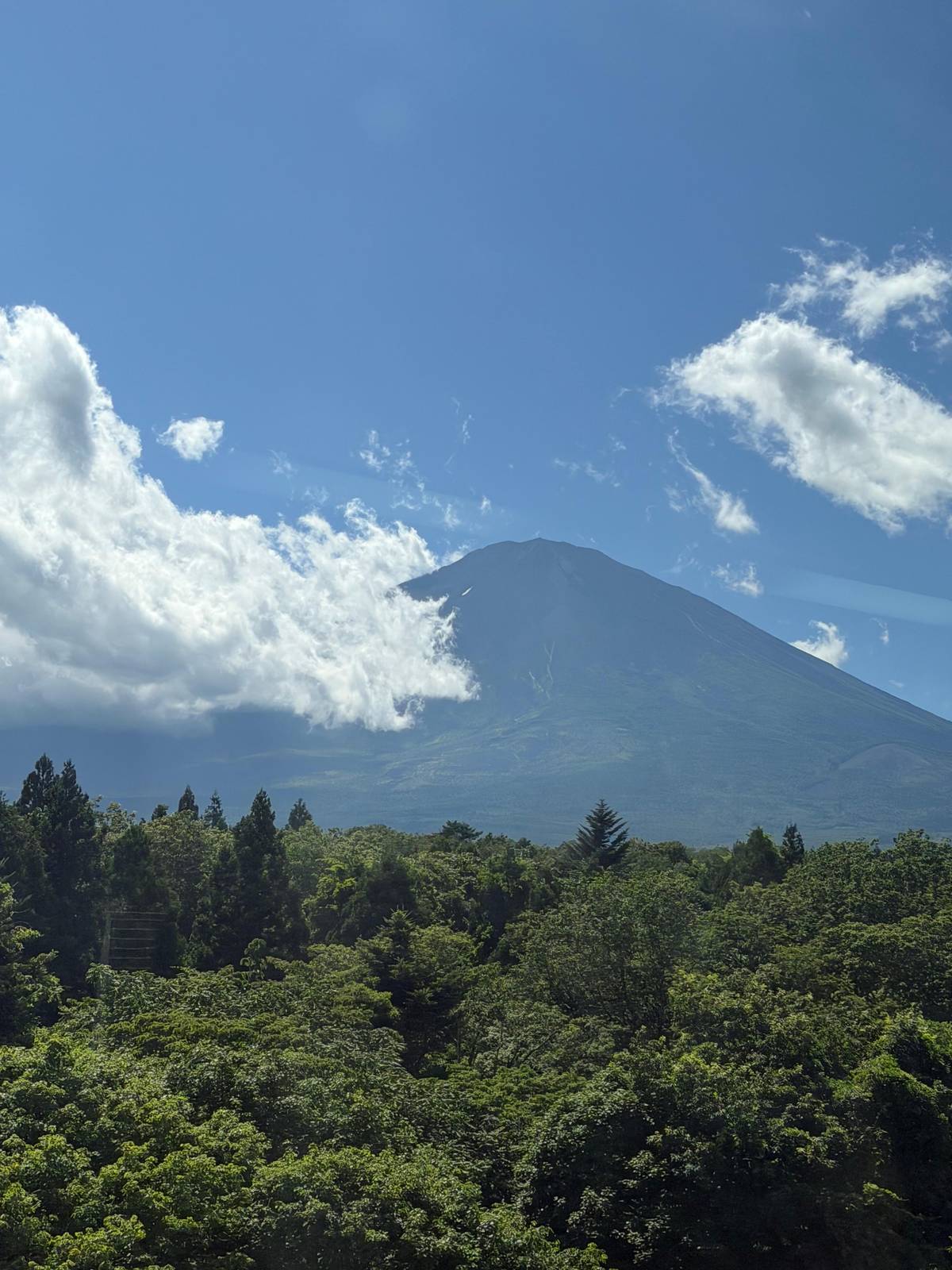
Can you see Mount Fuji from Kamakura? On clear days, yes, from the coast. Japan's tourism organization notes that Enoshima, the small island off Kamakura, offers seaside views of Fuji, and that cooler, drier air gives the best viewing.6
Winter is your best chance. Japan's tourism organization notes that crisp, clear winter days give the best views from afar, while the rainy season from early June to mid-July often hides the mountain.87 At around 74 km, Kamakura is closer to Fuji than central Tokyo is, though still far enough for haze to erase it.19
On this combination tour you do not need the view from the coast: the afternoon at Oishi Park and Lake Kawaguchi puts you at the foot of the mountain itself. Think of any glimpse from Kamakura in the morning as a preview. If you stay in Kamakura overnight on another trip, an early walk to the beach on a cold, clear morning is the best way to try for the view from the sea.
Map
First the whole way from Tokyo with Hakone and Kamakura, then the five lakes at the north foot, then the four 5th stations around the summit.
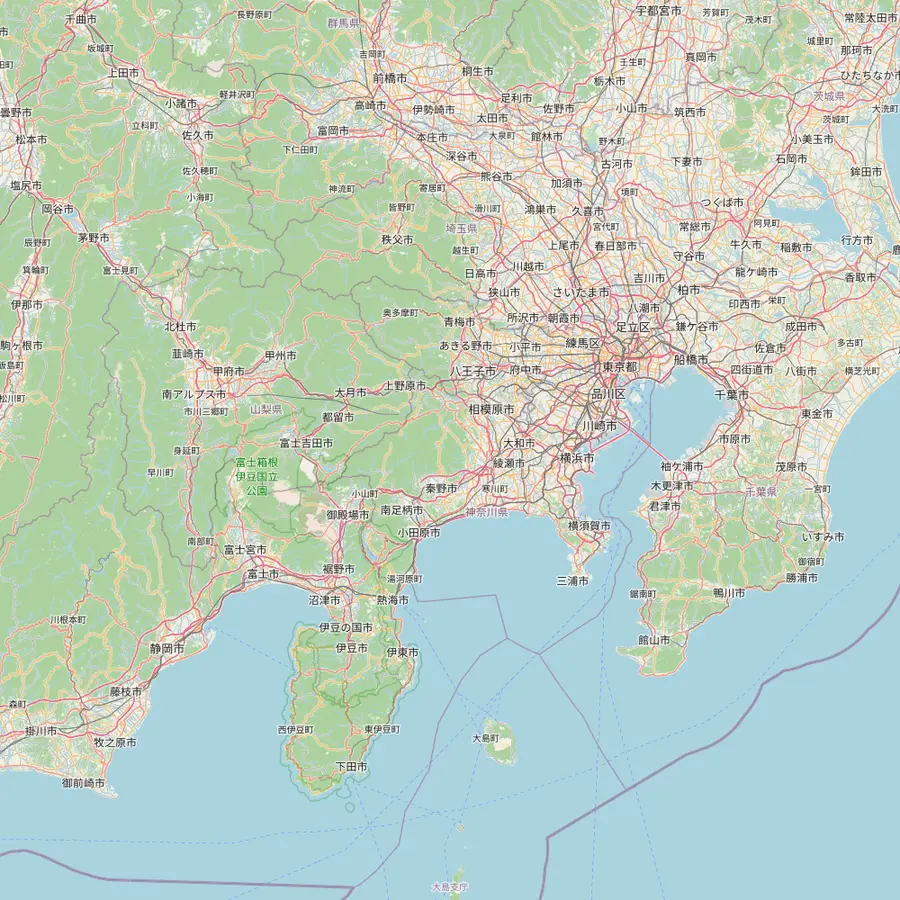 1Tokyo Station2Shinjuku3Kengamine summit4Kawaguchiko Station5Owakudani6Great Buddha, Kamakura
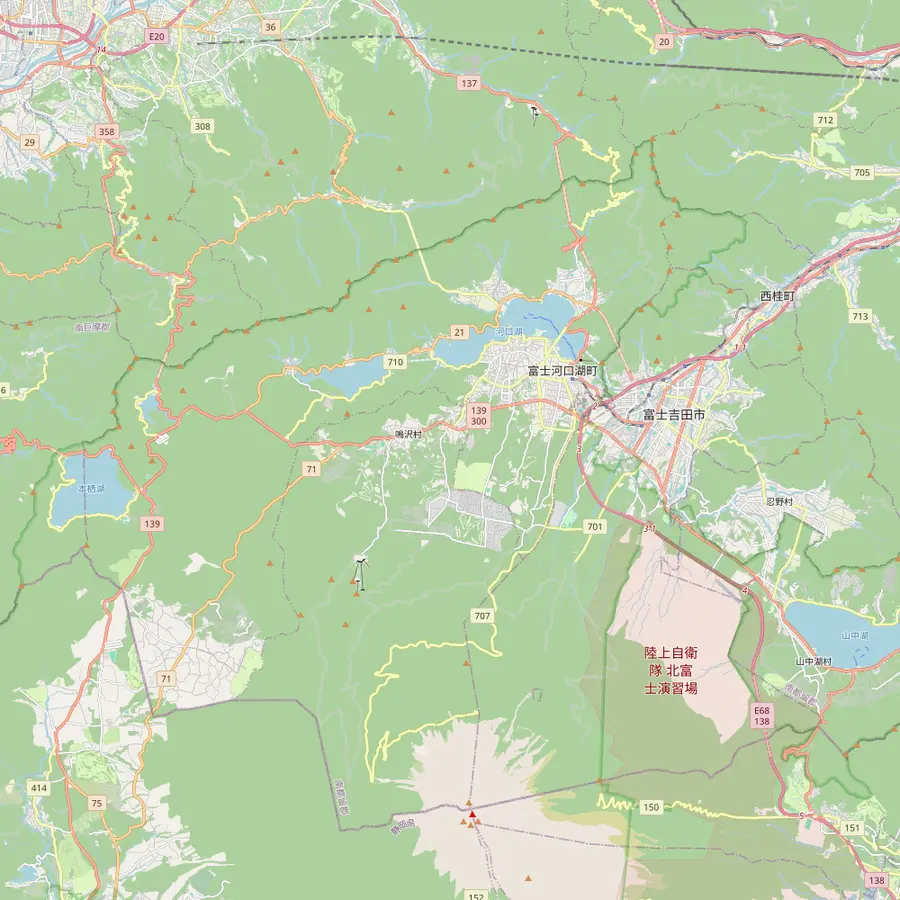 4Kawaguchiko Station7Oshino Hakkai8Lake Yamanaka swan shore9Chureito Pagoda10Oishi Park11Lake Sai12Lake Shoji13Lake Motosu
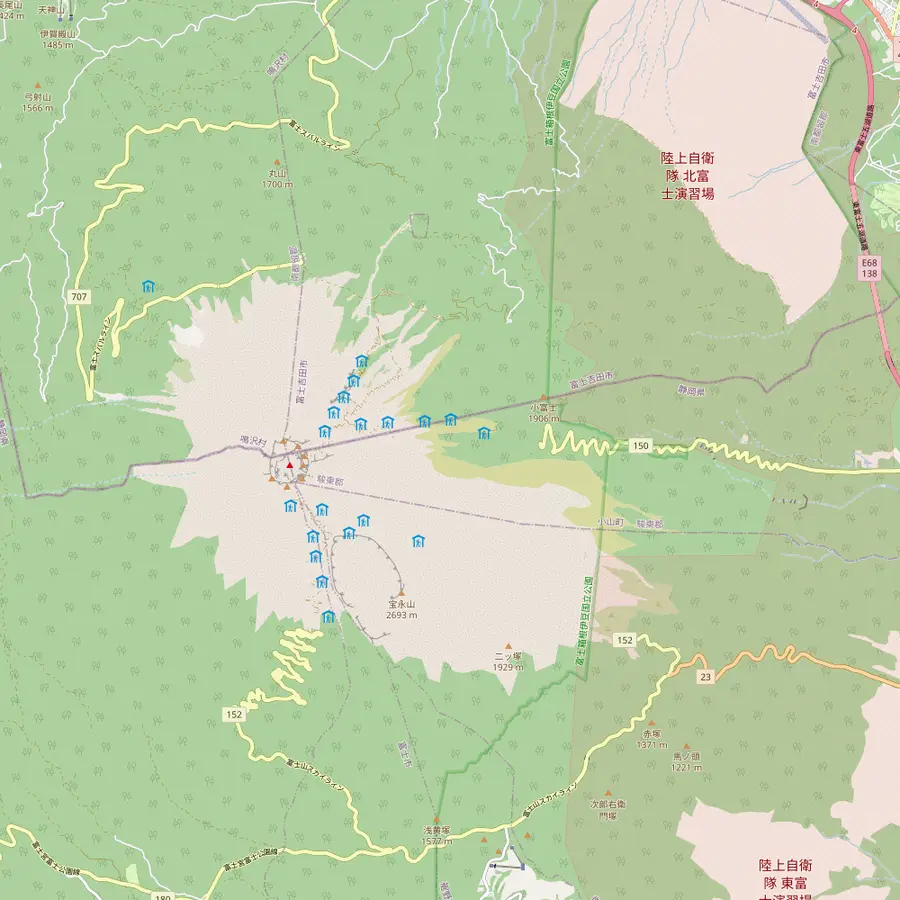 3Kengamine summit14Subaru Line 5th Station15Fujinomiya trailhead16Subashiri 5th Station17Gotemba New 5th Station18Hoei crater
Meeting point of the site tour at 8:00 AM, about 101 km in a straight line from the summit.9
In Google Maps ↗Second meeting point at 8:30 AM; the free 45th-floor observatories of the Tokyo Metropolitan Government stand here.10
In Google Maps ↗The highest point of Mount Fuji, 3,776 m, on the crater rim.11
In Google Maps ↗End of the Fujikyu line, 26.6 km from Otsuki; buses from Shinjuku get here in just under two hours.1213
In Google Maps ↗A 50-minute guided stop of the site tour, reached on the Hakone Ropeway.
In Google Maps ↗A bronze Buddha some 11.3 m tall, begun in 1252, about 74 km east of the summit.231
In Google Maps ↗Eight spring ponds, a national natural monument since 1934 and part of the World Heritage site.14
In Google Maps ↗Lake Yamanaka is the nearest lake to Fuji; the site tour stops 20 minutes at its swan shore.15
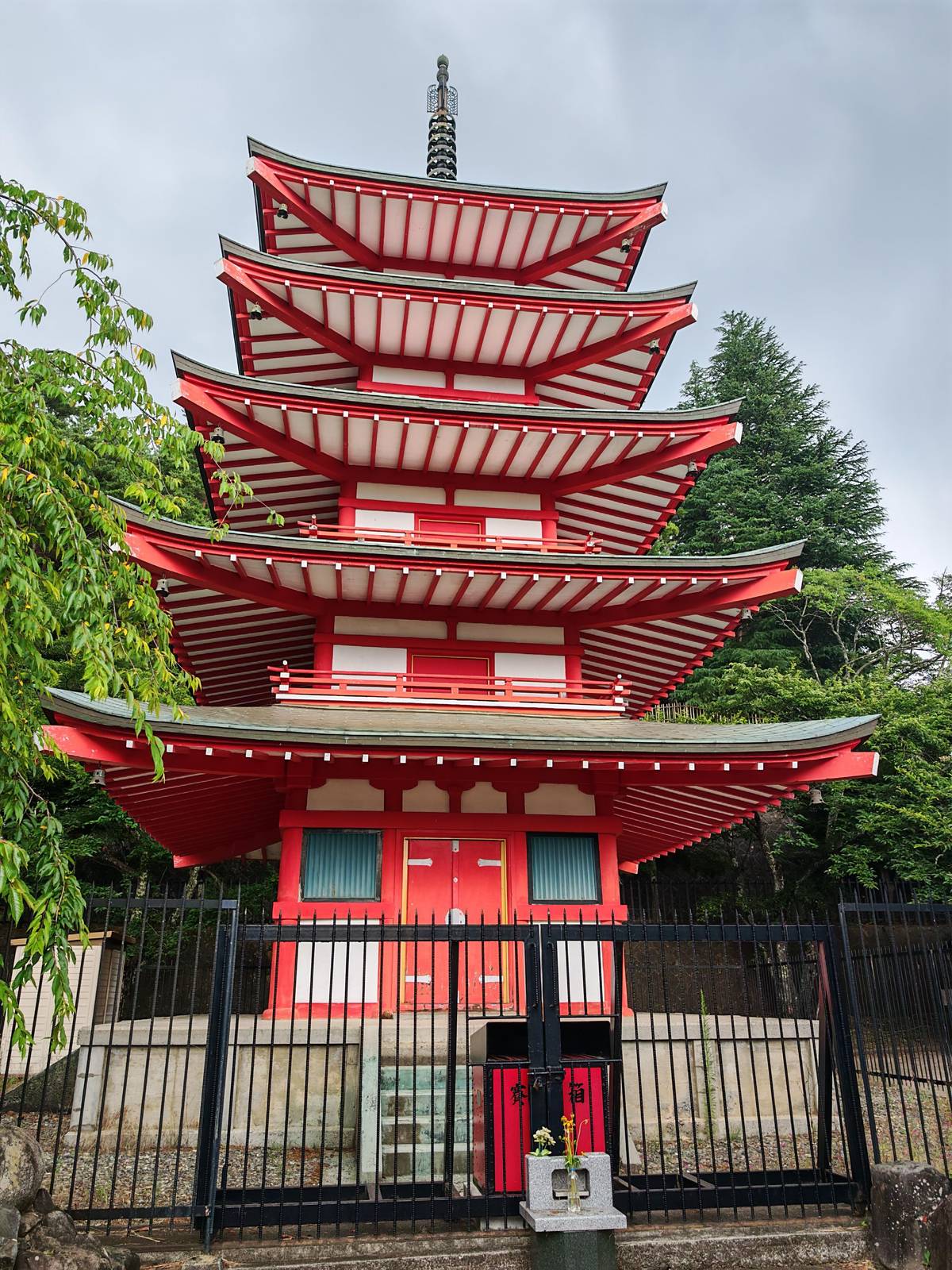
In Google Maps ↗Up 398 steps in Arakurayama Sengen Park, about 25 minutes on foot from Shimoyoshida Station.1617
In Google Maps ↗A Lake Kawaguchi park where Fuji rises behind lavender in early summer.18
In Google Maps ↗Split off an older lake by the lava of the Jogan eruption of 864.19
In Google Maps ↗The smallest of the Fuji Five Lakes, known for its Upside-down Fuji reflection.2021
In Google Maps ↗The deepest of the five lakes and the view on the 1,000-yen note.2223
In Google Maps ↗Start of the Yoshida Trail at 2,305 m, with the climbers' gate and Komitake Shrine.242526
In Google Maps ↗Trailhead at 2,000 m; in 2026 the Subashiri Trail opened on 1 July.2930
In Google Maps ↗Trailhead at 1,440 m; the way up is 10.5 km, about 9 hours.31
In Google Maps ↗The southeast-flank crater of the eruption that began on 16 December 1707.32
In Google Maps ↗Checklist
Cost calculator
Enter your group size to compare the combination with Fuji-only days.
Total from$167
per participant from $84
Check availabilityfree cancellationTotals here are a quick sum: the listing's GetYourGuide from-price times your party size, turned into your currency at the ECB rate for today. The final amount appears only at checkout.
Video
The video loads only when you tap play.
From Kamakura the coach drives about 2 hours to Lake Ashi in Hakone for a boat cruise listed at 10 minutes, and a stop at Motohakone. It is a brief taste of the lake rather than a full Hakone visit, which is the subject of other guides. Keep your camera handy on deck: the cruise is short, and the best angles pass quickly.
Japan's tourism organization describes Lake Ashinoko as crowned by Mount Fuji, with the sharpest views in winter.33 On a clear morning the cruise gives you a first look at the mountain from the southeast, before the coach swings round to the north side.
Then comes another 70-minute drive to the Fuji Five Lakes area. That long middle stretch is the reason the day runs to 10 or 11 hours: three areas, each worth a visit, linked by the expressway rather than by short hops.
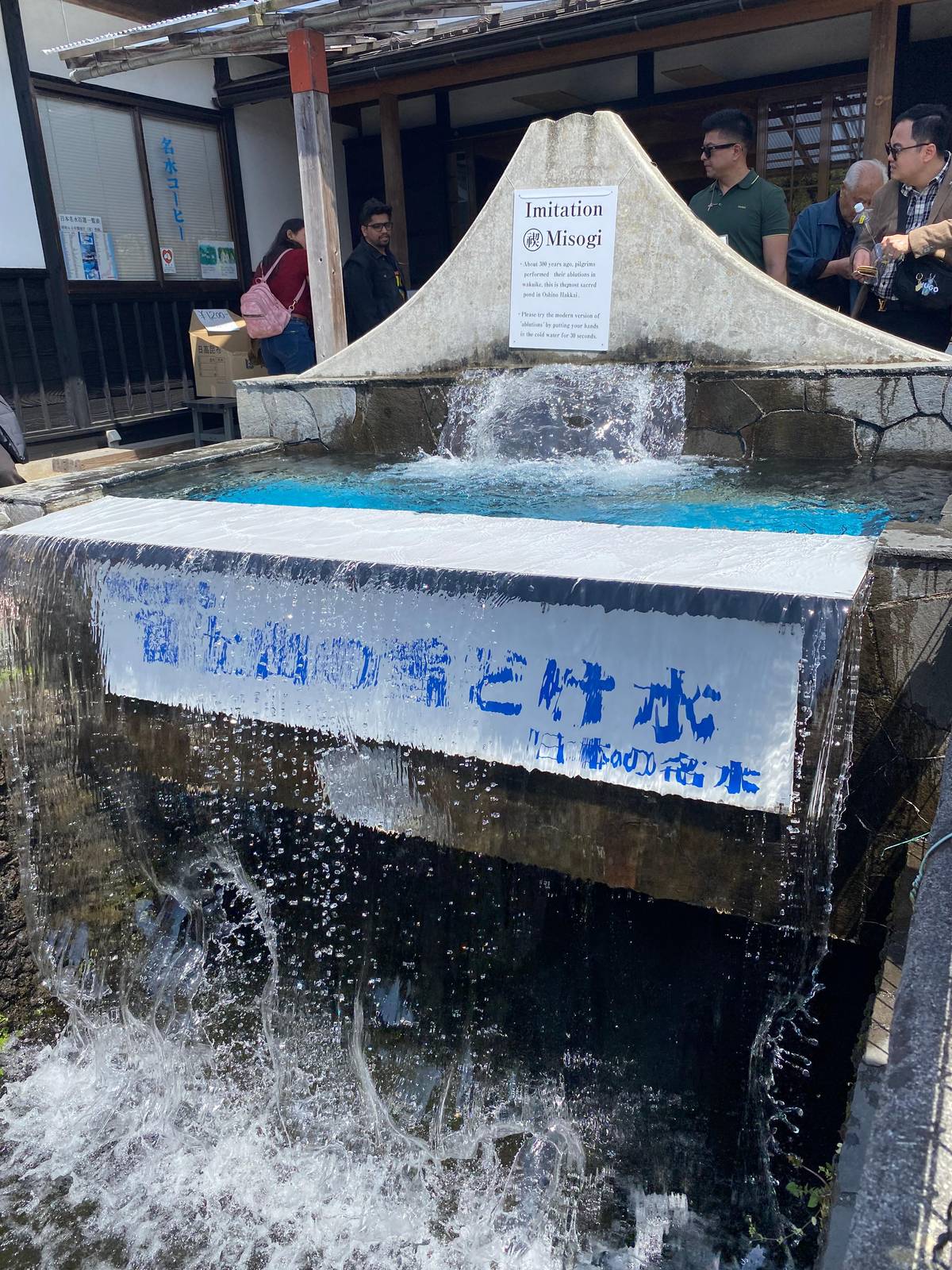
The longest stop of the day is Oshino Hakkai, listed at 1.5 hours with free time. Its spring ponds have been a national natural monument since 1934 and are part of the World Heritage site, with thatched cottages and waterwheels and the mountain beyond.1434
After a 30-minute drive the tour stops at Oishi Park for 45 minutes, on Lake Kawaguchi, then continues by the lake before the drive home. Japan's tourism organization notes the park for its early-summer lavender with Fuji behind.18 The return to Tokyo is listed at 2.5 hours.
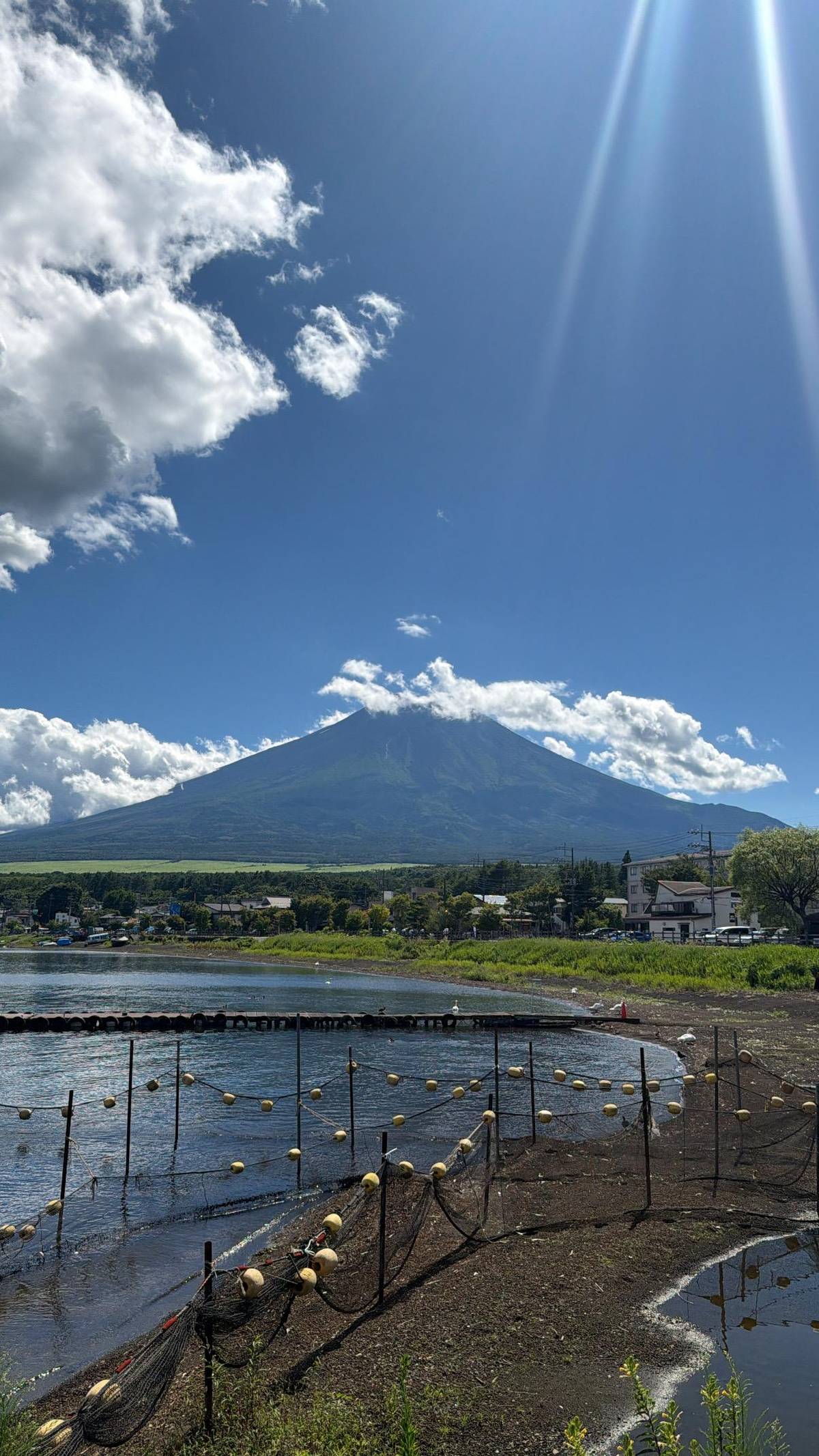
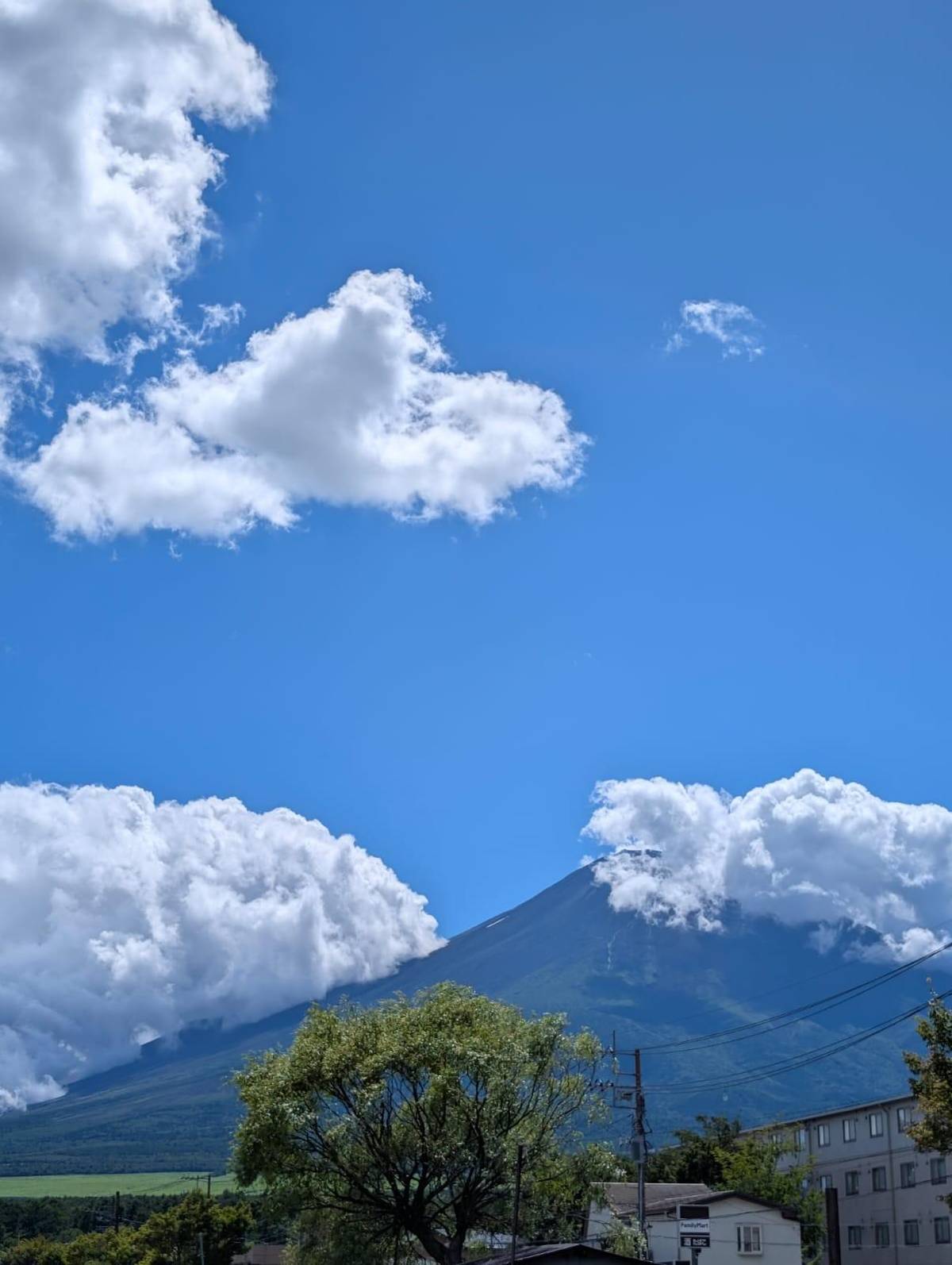
With the summit clear, this afternoon is the reward for the long morning. With the summit hidden, the ponds and the lakeshore still make a gentle end to a busy day, and the guide can explain what you would have seen. Bring a warm layer: the lakes sit well above the coast, and late afternoon there is cooler than the morning by the sea.
This tour comes in several options, and they are not the same day. The listing states that the basic option skips the Great Buddha and Lake Ashi and instead makes short stops at Arakurayama Sengen Park, the Hikawa Clock Shop, Oshino Hakkai, a Lawson store and Oishi Park.
Booking mainly for the Great Buddha? Then pick an option whose description lists Kotoku-in. If you only want the Fuji side, the basic option or a dedicated Five Lakes tour may suit you better and cost less; the Five Lakes day recommended elsewhere on this site starts from $50.
The guides speak English and Spanish, and you can drop out free of charge until 24 hours before, paying only later if you stay booked. As always at Fuji, the view of the summit depends on the weather on the day.
Choose it if you have a single free day, want to see the Great Buddha and the mountain, and are happy to spend a good part of the day on the coach. It is efficient: you see a temple town, a mountain lake and the spring ponds without arranging a single train. The variety suits families with older children, and the long coach legs give everyone a rest between stops.
Skip it if you prefer depth to breadth. Kamakura has far more than the Buddha, from temples and shrines to its beaches, and a day at Fuji's foot can easily fill itself with the lakes, the pagoda and the ponds. Separate days give each place its due.
If you stay with one Fuji day, our featured tour takes a different line, through Hakone to Lake Yamanaka and Oshino Hakkai, in 10 hours from $54. Compare the stops on both and pick the day whose places you most want to see.
Your day at Fuji
Meet at Tokyo Station or Shinjuku, pick a date, and cancel free up to 24 hours before.
On clear days, from the coast. Japan's tourism organization notes seaside views of Fuji from Enoshima, off Kamakura.6
20 minutes. The combination tour lists 20 minutes at Kotoku-in before the drive to Hakone.
Some 11.3 m. It weighs around 121 tons and sits in the open air, a National Treasure.2
No. The basic option skips the Great Buddha and Lake Ashi; check the option you book.
10 to 11 hours. The tour is listed at 10 to 11 hours from Tokyo, with long drives between areas.
English and Spanish. The listing names live guides in English and Spanish; there is no audio guide listed.
Yes, up to 24 hours before. Free cancellation up to 24 hours before; reserve now and pay later.
Sources