 Our pick
Guides
Language
EnglishCurrency
US dollar · $GetYourGuide shows prices in the currency you choose.
Guide · The day
What time does the Mount Fuji trip start? The day hour by hour
An early meeting in central Tokyo, two hours on the expressway, five stops and a long drive home. Here is the clock for our featured tour, and how other tours compare.
Check availabilityfrom $54 · cancellation is free
Editorial team, mount-fuji-tour.comUpdated October 22, 20266 minutes to read28 sources
Quick answer
- 01Meeting time
- 8:00 AM at Tokyo Station or 8:30 AM at Shinjuku.
- 02Be early
- Arrive at least 15 minutes before; staff wear yellow vests.
- 03First stop
- Hakone Shrine at about 10:30 AM.
- 04Back in Tokyo
- About 6:10 PM, sometimes after 8 PM in traffic.
- 05Other tours
- One bus day leaves the Yaesu terminal at 7:50 AM.
An early start from central Tokyo
What time does the Mount Fuji trip start? On our featured tour, the meeting time is 8:00 AM at JR Tokyo Station, by the BEAMS sign known as STAND T, or 8:30 AM at Shinjuku, at Tokyo Mode Gakuen. Those are meeting times, not departure times: the operator asks you to arrive at least 15 minutes early and look for staff in yellow vests.
You do not need to hunt for the details on the day. The operator emails the guide, driver and meeting details the evening before the tour. Check your spam folder that night, save the email offline, and plan your route to the meeting point with a little slack for the morning rush. Trains in Tokyo run early and often, but the walk from the platform to the right exit can take longer than the ride itself.
Choose the meeting point closer to your hotel. Tokyo Station suits the east and the business districts, Shinjuku the west side of the city. Both are also the drop-off points in the evening, so you come back to the same place you left from. If your hotel sits between the two, pick the one with the simpler train ride; at 8 in the morning a direct line beats a shorter one with a change.
Our featured tour
The day by the operator's clock
-
8:00 / 8:30 AM
Meet in Tokyo
Tokyo Station at 8:00 AM, Shinjuku at 8:30 AM.
-
About 10:30 AM
Hakone Shrine
Heiwa no Torii and the shrine, 20 minutes each.
-
About 12:30 PM
Hakone Ropeway
30 minutes in the cable car, fare included.
-
About 1:00 PM
Owakudani
A guided stop of 50 minutes in the volcanic valley.
-
About 3:00 PM
Lake Yamanaka
20 minutes at the swan shore, lunch optional.
-
About 3:40 PM
Oshino Hakkai
40 minutes at the spring ponds, then home.
Morning: the drive and Hakone
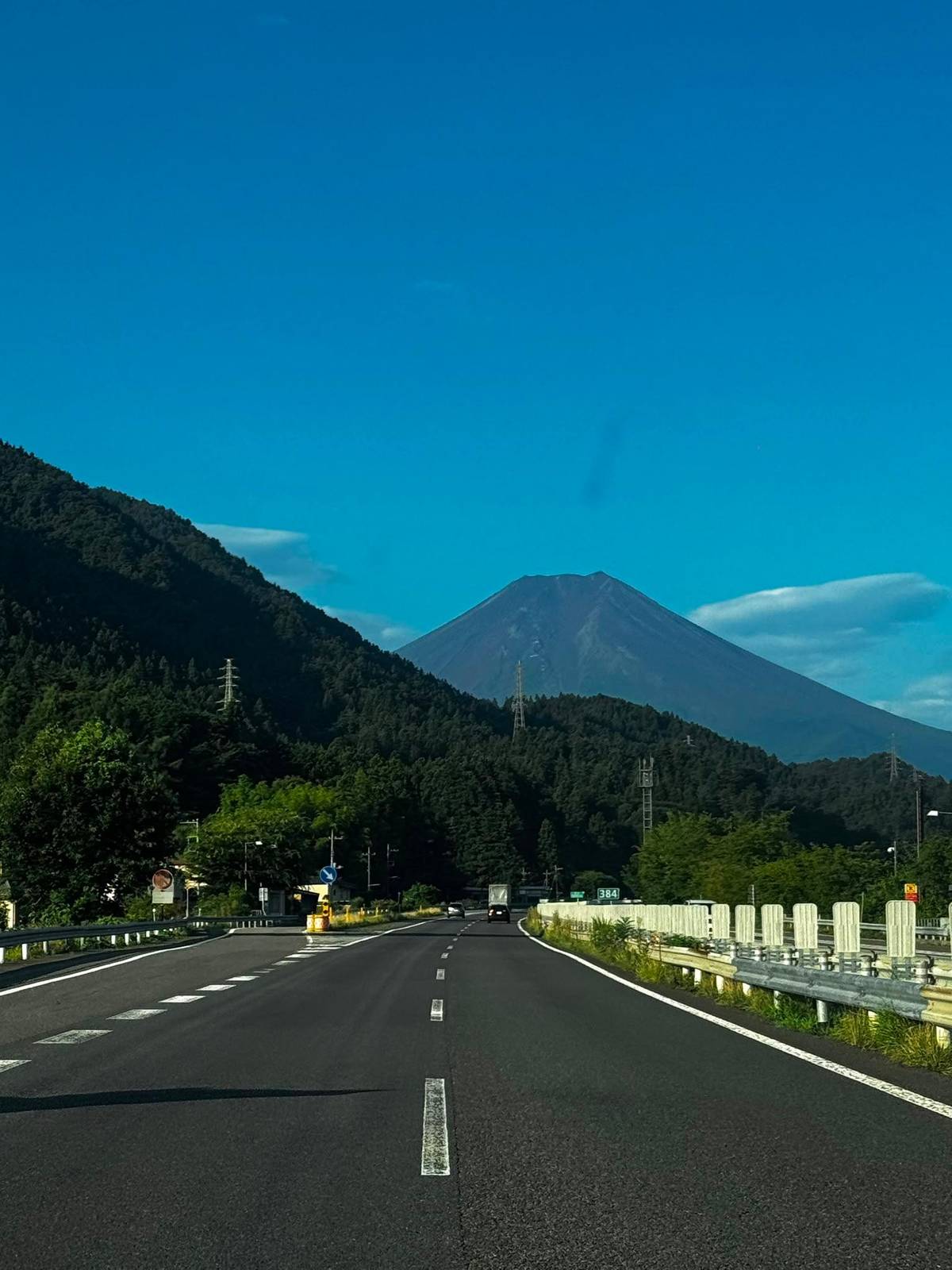
The coach leg to the first stop is listed at 2 hours. It is a good time to rest, listen to the guide and watch the city give way to hills. Sit on the side the guide suggests for the first views, keep a jacket within reach for the cooler air at the first stop, and use the restroom before you board. The operator gives approximate times for each part of the day, and the first is about 10:30 AM at Hakone Shrine.
The listed itinerary gives the Heiwa no Torii 20 minutes and Hakone Shrine 20 minutes with some free time. Around 12:00 PM comes a choice: an optional 25-minute cruise on Lake Ashi, paid on the day at around 1,700 JPY, or the tour vehicle to the Togendai ropeway station.
Next, at about 12:30 PM, comes the Hakone Ropeway, listed at 30 minutes, with the one-way fare included. If the ropeway is not running, which the ropeway operator decides, the tour operator refunds 1,000 JPY per person on request by email.
Minutes at each stop
Where the day's time goes
min
Start times compared
When the Fuji tours leave Tokyo
| Tour | Meet | Where | Day length |
|---|---|---|---|
| Hakone and Oshino day | 8:00 or 8:30 AM | Tokyo Station or Shinjuku | 10 hrs |
| Heritage day at the lakes | 8:00 or 8:30 AM | Tokyo Station or Shinjuku | 10 hrs |
| Bus day with hotel lunch | 7:40 AM, leaves 7:50 | Yaesu bus terminal | 11-11.5 hrs |
| Guided climb, English | 7:10 AM, leaves 7:30 | Shinjuku Post Office | 2 days |
| Mountain guide climb | reception from 6:30 AM | Near Tochomae Station | 2 days |
From each GetYourGuide listing; times are the operators' own and can change with traffic.
Three different clocks
Early, earlier and overnight
Our pick Earliest start
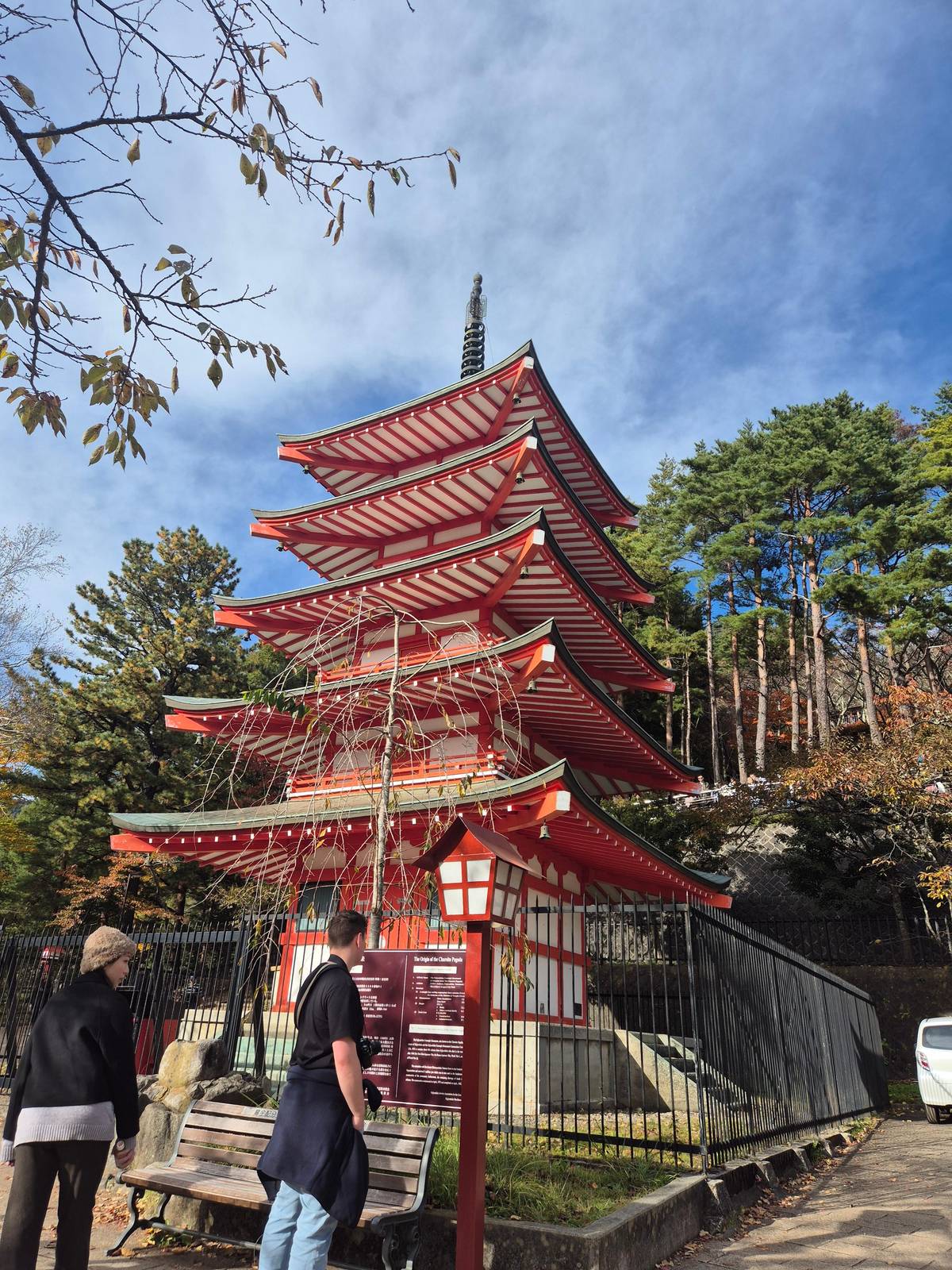 Same start
Decision helper
Which start suits you?
Pick a tour by its clock as well as its stops
The 8:00 AM meeting
Our featured tour meets by the BEAMS sign at JR Tokyo Station.
The 8:30 AM Shinjuku meeting
The second meeting point is at Tokyo Mode Gakuen in Shinjuku.
The bus with hotel lunch
It meets at 7:40 AM and includes a 1-hour hotel lunch.
Move them
Returns can run after 8 PM in traffic, says the operator.
A climbing tour
One meets at 7:10 AM and returns the next day.
Midday: Owakudani and lunch
At about 1:00 PM the coach reaches Owakudani, a volcanic valley where steam rises from the ground, for a guided stop listed at 50 minutes. This is the longest single stop of the day, and the one where you will want your camera ready.
Lunch is not included on this tour. The listing offers an optional 40-minute lunch at a local restaurant, at extra cost, later in the day at the Lake Yamanaka stop. Bring snacks and water for the coach and some cash; the listing suggests both. At Owakudani and around the lakes there are shops and stands, so a small snack bought along the way can carry you to a late lunch.
Food is not allowed on the vehicle itself, so eat at the stops. With a long gap between breakfast and a mid-afternoon meal, a good breakfast before the 8:00 AM meeting makes the morning easier.
Map
From Tokyo to the lakes and the trailheads of Fuji
First the whole way from Tokyo with Hakone and Kamakura, then the five lakes at the north foot, then the four 5th stations around the summit.
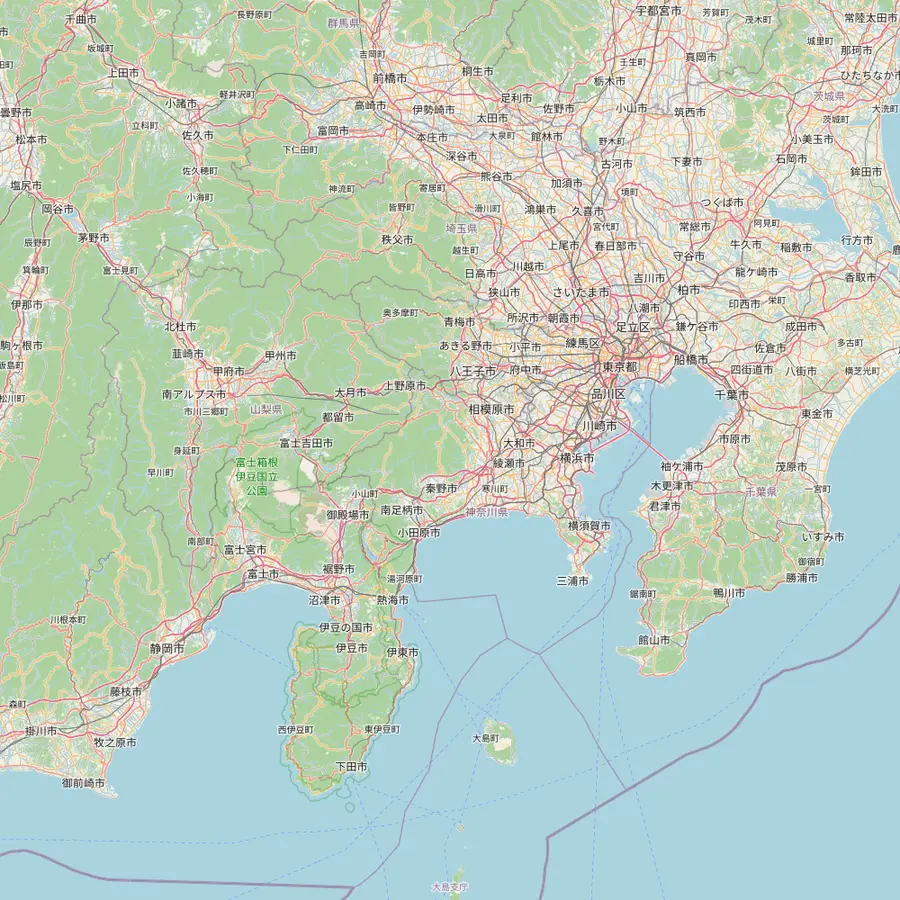 1Tokyo Station2Shinjuku3Kengamine summit4Kawaguchiko Station5Owakudani6Great Buddha, Kamakura
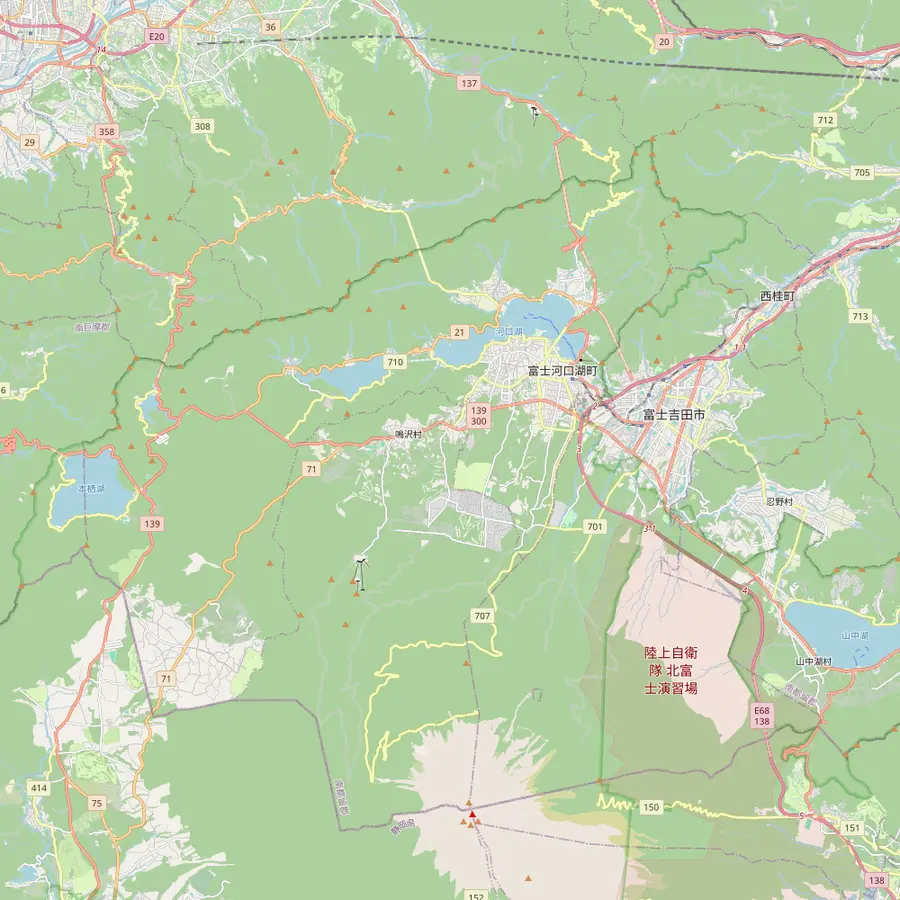 4Kawaguchiko Station7Oshino Hakkai8Lake Yamanaka swan shore9Chureito Pagoda10Oishi Park11Lake Sai12Lake Shoji13Lake Motosu
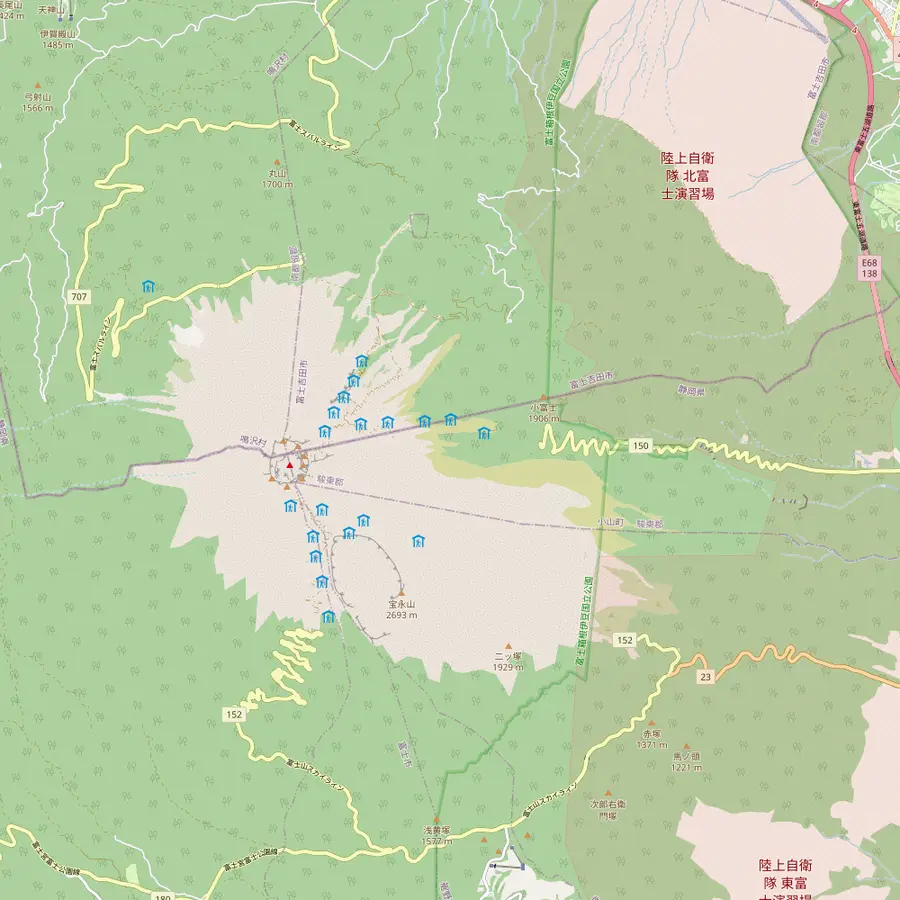 3Kengamine summit14Subaru Line 5th Station15Fujinomiya trailhead16Subashiri 5th Station17Gotemba New 5th Station18Hoei crater
- 1Tokyo Station
Meeting point of the site tour at 8:00 AM, about 101 km in a straight line from the summit.1
In Google Maps ↗ - 2Shinjuku
Second meeting point at 8:30 AM; the free 45th-floor observatories of the Tokyo Metropolitan Government stand here.2
In Google Maps ↗ - 3Kengamine summit
The highest point of Mount Fuji, 3,776 m, on the crater rim.3
In Google Maps ↗ - 4Kawaguchiko Station
End of the Fujikyu line, 26.6 km from Otsuki; buses from Shinjuku get here in just under two hours.45
In Google Maps ↗ - 5Owakudani
A 50-minute guided stop of the site tour, reached on the Hakone Ropeway.
In Google Maps ↗ - 6Great Buddha, Kamakura
A bronze Buddha some 11.3 m tall, begun in 1252, about 74 km east of the summit.678
In Google Maps ↗ - 7Oshino Hakkai
Eight spring ponds, a national natural monument since 1934 and part of the World Heritage site.9
In Google Maps ↗ - 8Lake Yamanaka swan shore
Lake Yamanaka is the nearest lake to Fuji; the site tour stops 20 minutes at its swan shore.10
In Google Maps ↗ - 9Chureito Pagoda
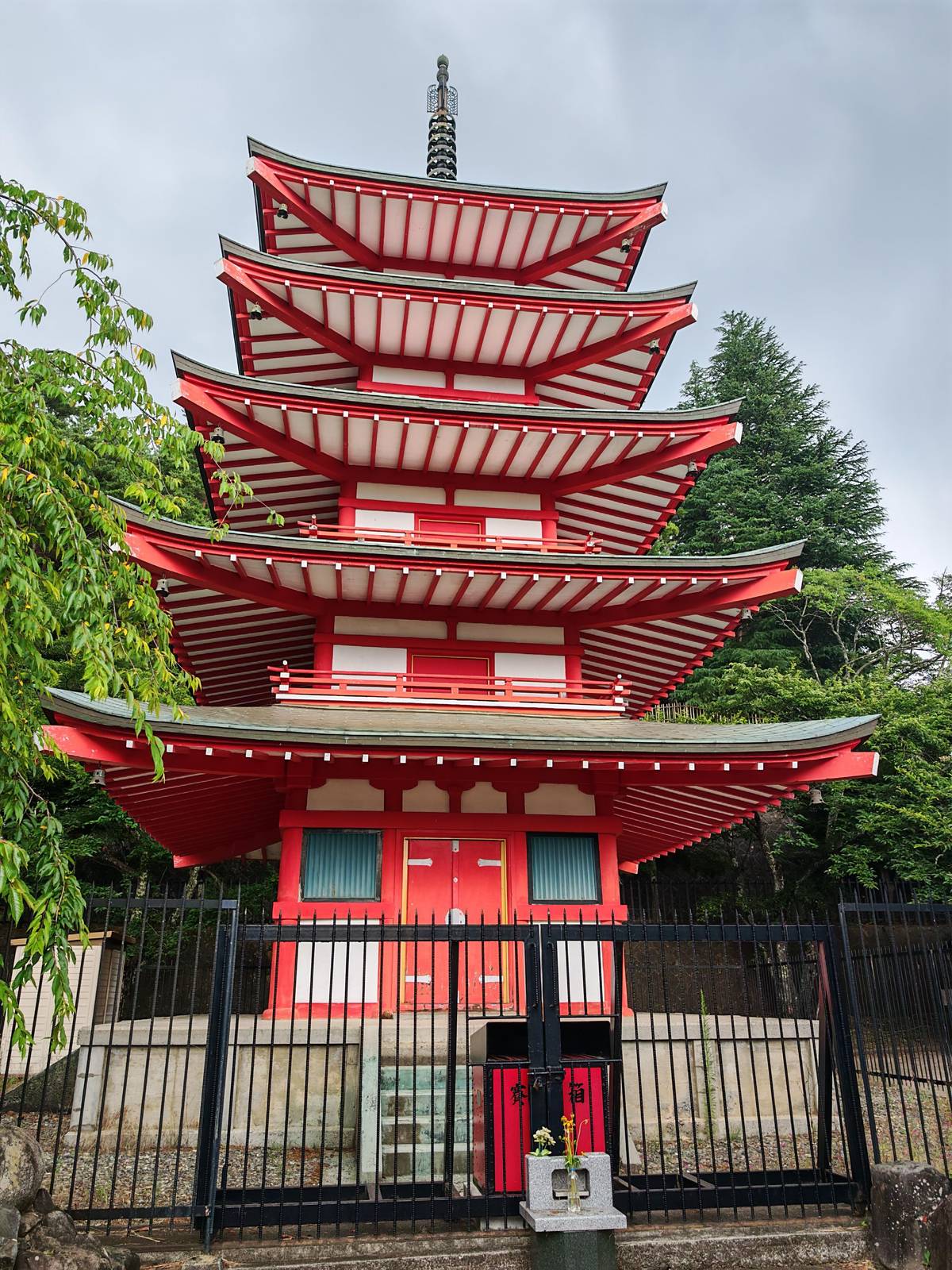
Up 398 steps in Arakurayama Sengen Park, about 25 minutes on foot from Shimoyoshida Station.1112
In Google Maps ↗ - 10Oishi Park
A Lake Kawaguchi park where Fuji rises behind lavender in early summer.13
In Google Maps ↗ - 11Lake Sai
Split off an older lake by the lava of the Jogan eruption of 864.14
In Google Maps ↗ - 12Lake Shoji
The smallest of the Fuji Five Lakes, known for its Upside-down Fuji reflection.1516
In Google Maps ↗ - 13Lake Motosu
The deepest of the five lakes and the view on the 1,000-yen note.1718
In Google Maps ↗ - 14Subaru Line 5th Station
Start of the Yoshida Trail at 2,305 m, with the climbers' gate and Komitake Shrine.192021
In Google Maps ↗ - 15
- 16Subashiri 5th Station
Trailhead at 2,000 m; in 2026 the Subashiri Trail opened on 1 July.2425
In Google Maps ↗ - 17Gotemba New 5th Station
Trailhead at 1,440 m; the way up is 10.5 km, about 9 hours.26
In Google Maps ↗ - 18Hoei crater
The southeast-flank crater of the eruption that began on 16 December 1707.27
In Google Maps ↗
Checklist
For an on-time Fuji day
01
The night before
- Read the operator's email and check spam
- Two alarms and a planned route
- Cash for lunch and the cruise
02
On the day
- Look for staff in yellow vests
- One bag only on the coach
- Water and snacks for the drive
Cost calculator
Price the day for your group
Enter your group size to compare three tours and their start times.
People
Total from$107
per participant from $54
Check availabilityfree cancellationTotals here are a quick sum: the listing's GetYourGuide from-price times your party size, turned into your currency at the ECB rate for today. The final amount appears only at checkout.
Video
Ultimate Mt. Fuji adventure: 6 locations in a single day
The video loads only when you tap play.
Afternoon: Lake Yamanaka and Oshino Hakkai
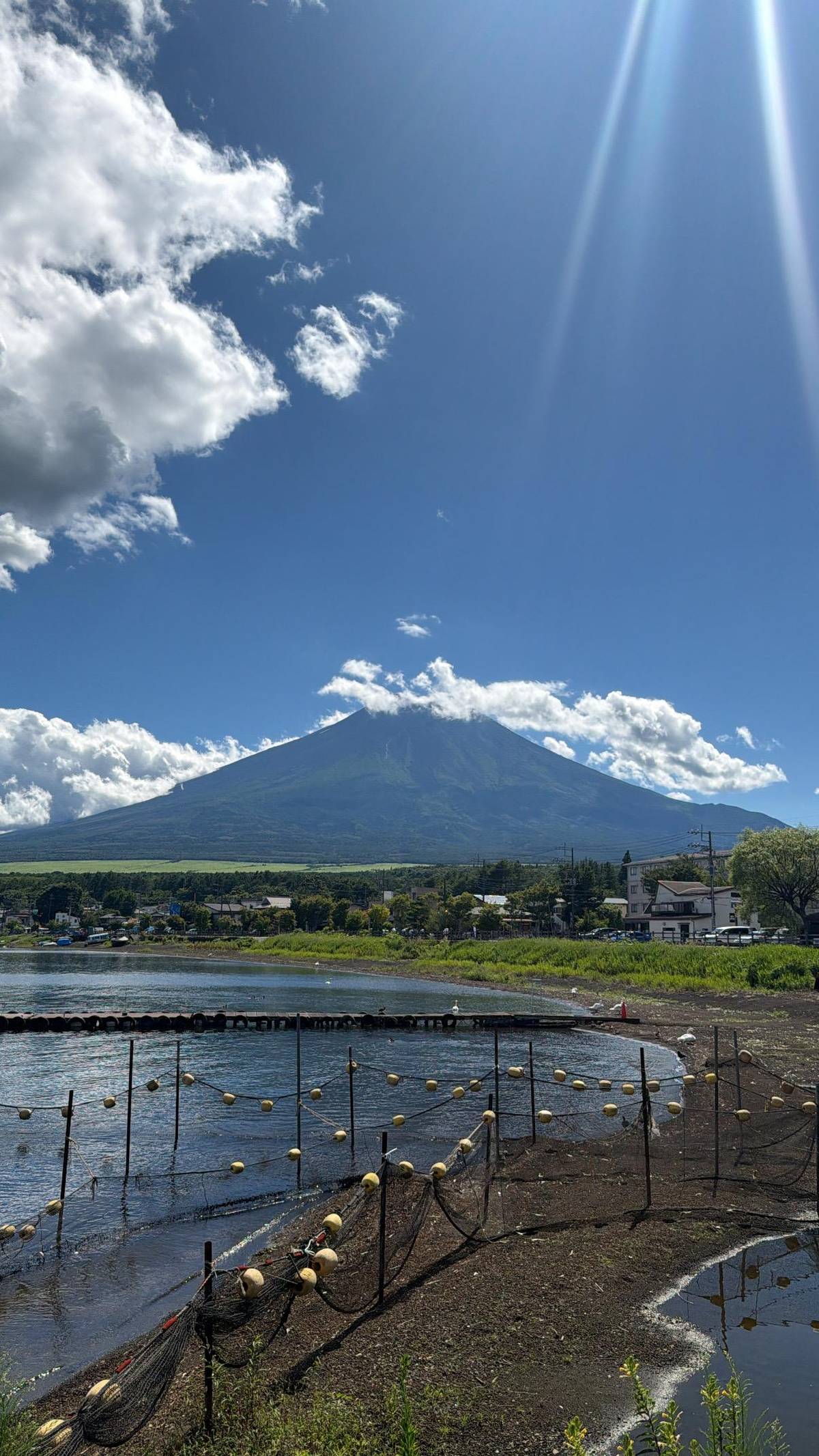
Around 3:00 PM the tour reaches the swan shore of Lake Yamanaka, listed at 20 minutes, with the lunch option there. Lake Yamanaka is the lake nearest to Mount Fuji, and on a clear afternoon the mountain rises straight behind the water.10
At about 3:40 PM comes the last stop, Oshino Hakkai, listed at 40 minutes. Its spring ponds became a national natural monument in 1934, and thatched cottages and waterwheels stand around them with the mountain behind.928
The coach leaves for Tokyo at about 4:10 PM, according to the operator's schedule. That is the moment to make sure you are back on time: the guide counts heads, and holiday traffic waits for no one. Buy any souvenirs before the last stop ends, and keep a warm layer out for the evening drive, when the air-conditioning and the tiredness of the day both set in.
Evening: the drive home and why it can run late
The way back is listed at 2 hours, and the operator gives about 6:10 PM for arrival at Tokyo or Shinjuku. It is honest about the risks: traffic, weather, holidays and peak seasons can change the timings, and returns can run after 8 PM.
There is a legal limit behind the schedule too. The listing explains that Japanese drivers may work at most 10 hours a day, so time at the stops can be shortened or even cancelled when traffic eats into the day.
Do not book anything for the evening. The operator itself asks guests not to schedule other activities after the tour, and a dinner reservation or a show ticket is exactly what a late return puts at risk. Plan a relaxed evening near your drop-off point instead. Both Tokyo Station and Shinjuku have plenty of places to eat late, which turns a slow return into an easy dinner rather than a stress.
How other tours keep time
Start times are similar across most Fuji day trips. A heritage tour of the lakes also departs Tokyo Station at 8:00 AM and Shinjuku at 8:30 AM. A bus day built around a hotel lunch meets at 7:40 AM in the Yaesu bus terminal and leaves at 7:50 AM, without waiting for latecomers.
Climbing tours start earlier still. A guided two-day climb meets at the Shinjuku Post Office at 7:10 AM and departs at 7:30 AM. Another climb opens its reception at 6:30 AM near Tochomae Station.
Whichever tour you book, read the Mount Fuji day trip itinerary as approximate. Our featured tour's operator warns that traffic and weather can change it, and the stop lengths you see are the plan for an ordinary day, not a guarantee. Treat the times as a rhythm for the day rather than a timetable, and enjoy the extra minutes when traffic is kind.
Small habits that save the day
Set two alarms, leave early and know your exit at the station. Tokyo Station and Shinjuku are huge, and finding a sign in a crowd early in the morning is harder than it sounds, so save the meeting details from the operator's email before you leave.
Carry one piece of luggage at most, which is the operator's limit, and leave large suitcases at the hotel. Wear comfortable shoes and clothing for the weather, and bring a camera, water, snacks and cash, as the listing suggests.
Keep the guide's contact number handy, follow the time each stop is called for, and be back at the coach a few minutes early. On a day this full, the whole group keeps to schedule only when everyone does.
Your day at Fuji
Hakone, Lake Yamanaka and Oshino in one day.
Meet at Tokyo Station or Shinjuku, pick a date, and cancel free up to 24 hours before.


You ask,we answer.
What time do I need to be at the meeting point?
15 minutes before the meeting. The tour meets at 8:00 AM at Tokyo Station or 8:30 AM at Shinjuku; arrive at least 15 minutes early.
When do we get back to Tokyo?
About 6:10 PM. That is the operator's estimate; traffic, weather or holidays can push the return past 8 PM.
When will I get the meeting details?
The evening before. The operator emails the guide, driver and meeting details the night before the tour.
Is there a lunch break?
Yes, an optional one. An optional 40-minute lunch at a local restaurant, at extra cost; lunch is not included.
What is the longest stop?
Owakudani, 50 minutes. The guided stop at the volcanic valley is listed at 50 minutes.
Can stops be shortened?
Yes, in heavy traffic. Drivers may work at most 10 hours a day, so stops can be shortened or cancelled.
Can I bring a suitcase?
One piece of luggage. Each guest may bring one piece of luggage on the coach, so leave big cases at the hotel.
Sources
What this text is based on
- 1Geospatial Information Authority of JapanGeodesic distance calculation: Fujisan summit (Kengamine) to Tokyo Station↩
- 2Japan National Tourism Organization (JNTO)The Top 30 Spots for Viewing Mt. Fuji↩
- 3Japan Meteorological AgencyNational Catalogue of the Active Volcanoes in Japan: 55. Fujisan↩
- 4Fujikyu Railway (Fujisanroku Electric Railway)Fujikyu Railway Line (top page)↩
- 5Japan National Tourism Organization (JNTO)Fuji Five Lakes Area↩
- 6↩
- 7↩
- 8Geospatial Information Authority of JapanGeodesic distance calculation: Fujisan summit (Kengamine) to the Great Buddha of Kamakura↩
- 9Yamanashi Tourism Organization (official tourism site of Yamanashi Prefecture)忍野八海 (Oshino Hakkai)↩
- 10Japan National Tourism Organization (JNTO)The Top 30 Spots for Viewing Mt. Fuji↩
- 11Fujiyoshida Tourism Promotion Service (official Fujiyoshida tourist guide)Arakurayama Sengen Park and Chureito Pagoda↩
- 12Fujiyoshida Tourism Promotion Service (official Fujiyoshida tourist guide)Arakurayama Sengen Park and Chureito Pagoda↩
- 13Japan National Tourism Organization (JNTO)The Top 30 Spots for Viewing Mt. Fuji↩
- 14Japan Meteorological AgencyNational Catalogue of the Active Volcanoes in Japan: 55. Fujisan↩
- 15Japan National Tourism Organization (JNTO)The Top 30 Spots for Viewing Mt. Fuji↩
- 16Japan National Tourism Organization (JNTO)Fuji Five Lakes Area↩
- 17Japan National Tourism Organization (JNTO)Fuji Five Lakes Area↩
- 18Japan National Tourism Organization (JNTO)The Top 30 Spots for Viewing Mt. Fuji↩
- 19Council for the Promotion of Appropriate Use of Mt. Fuji (official Mt. Fuji climbing website: Ministry of the Environment, Yamanashi and Shizuoka Prefectures)Comparison of Routes↩
- 20Council for the Promotion of Appropriate Use of Mt. Fuji (official Mt. Fuji climbing website: Ministry of the Environment, Yamanashi and Shizuoka Prefectures)FAQ↩
- 21Fujiyoshida Tourism Promotion Service (official Fujiyoshida tourist guide)Fuji Subaru Line 5th Station↩
- 22Council for the Promotion of Appropriate Use of Mt. Fuji (official Mt. Fuji climbing website: Ministry of the Environment, Yamanashi and Shizuoka Prefectures)Comparison of Routes↩
- 23Council for the Promotion of Appropriate Use of Mt. Fuji (official Mt. Fuji climbing website: Ministry of the Environment, Yamanashi and Shizuoka Prefectures)Comparison of Routes↩
- 24Council for the Promotion of Appropriate Use of Mt. Fuji (official Mt. Fuji climbing website: Ministry of the Environment, Yamanashi and Shizuoka Prefectures)Comparison of Routes↩
- 25Council for the Promotion of Appropriate Use of Mt. Fuji (official Mt. Fuji climbing website: Ministry of the Environment, Yamanashi and Shizuoka Prefectures)[Shizuoka Prefecture Route] Restrictions on climbing Mt. Fuji (2026)↩
- 26Council for the Promotion of Appropriate Use of Mt. Fuji (official Mt. Fuji climbing website: Ministry of the Environment, Yamanashi and Shizuoka Prefectures)Comparison of Routes↩
- 27Japan Meteorological AgencyNational Catalogue of the Active Volcanoes in Japan: 55. Fujisan↩
- 28Japan National Tourism Organization (JNTO)The Top 30 Spots for Viewing Mt. Fuji↩